Contact Us: support@wecarebabies.com

Why Do Babies Get Skin Rashes During Summer? (Causes & Prevention Guide)

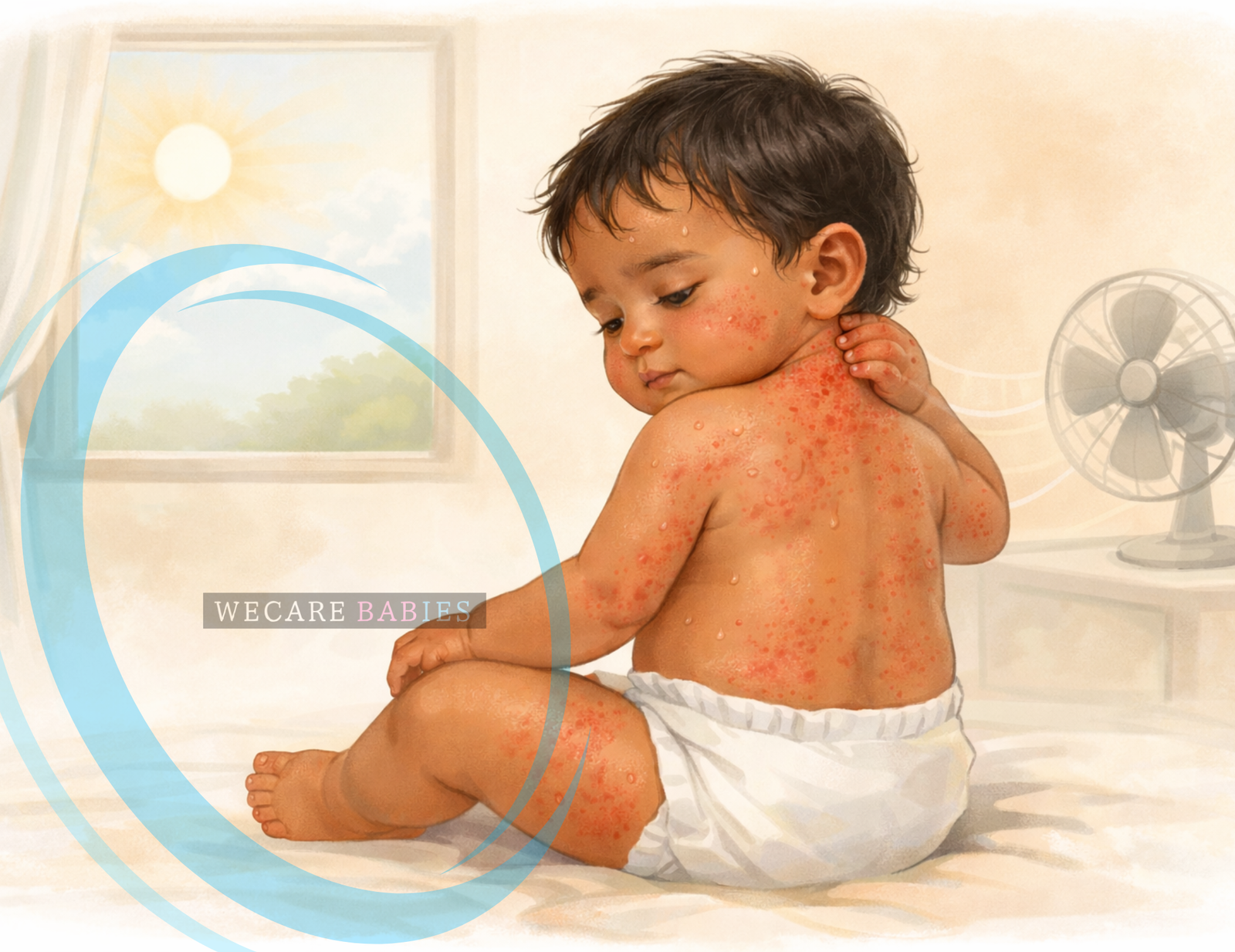
Why do babies get skin rashes during summer? Summer can be uncomfortable—not just for adults, but especially for babies. Temperatures rise, humidity can stay high, and even indoor spaces may feel warm and sticky. Many parents visit clinics worried after noticing small red rashes on their baby’s neck, back, chest, or diaper area during the warmer months.
A common question is, “Doctor, are we keeping the baby clean? Why are these rashes still appearing?”
This concern is completely understandable. A baby’s skin is new, sensitive, and still learning how to regulate heat and sweat. During summer, this adjustment becomes more challenging.
The reassuring truth is this: baby skin rashes in summer are very common, and in most cases, they are harmless and temporary. With the right understanding and simple care, they can usually be managed safely at home.
Table of Contents
What summer skin rashes in babies actually are?
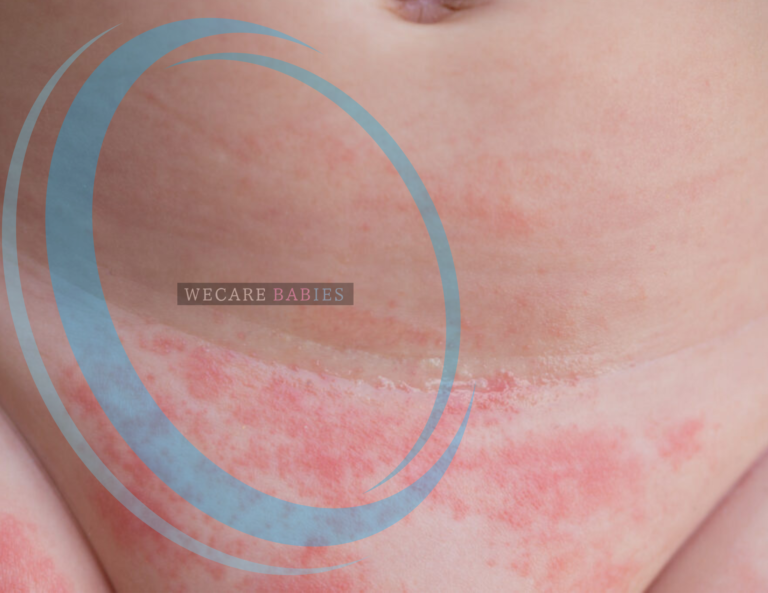
Most summer rashes in babies are heat-related skin reactions, not infections. The most common features include:
- Small red bumps
- Mild redness in skin folds
- Tiny pinhead-sized spots
- Slight roughness or itching
These rashes usually appear in areas where:
- Sweat collects
- Air circulation is poor
- Skin rubs against skin or clothing
In babies under one year of age, sweat glands are still immature. This means sweat can get trapped under the skin more easily, leading to irritation.
Importantly, these rashes are not a sign of poor hygiene or illness in most cases.
Why Do Babies Get Skin Rashes During Summer? 5 Common Causes & Prevention Tips
So why do babies get skin rashes during summer more often than other seasons? The main reason is heat combined with moisture
Summer creates a perfect environment for skin irritation in babies due to a combination of factors:
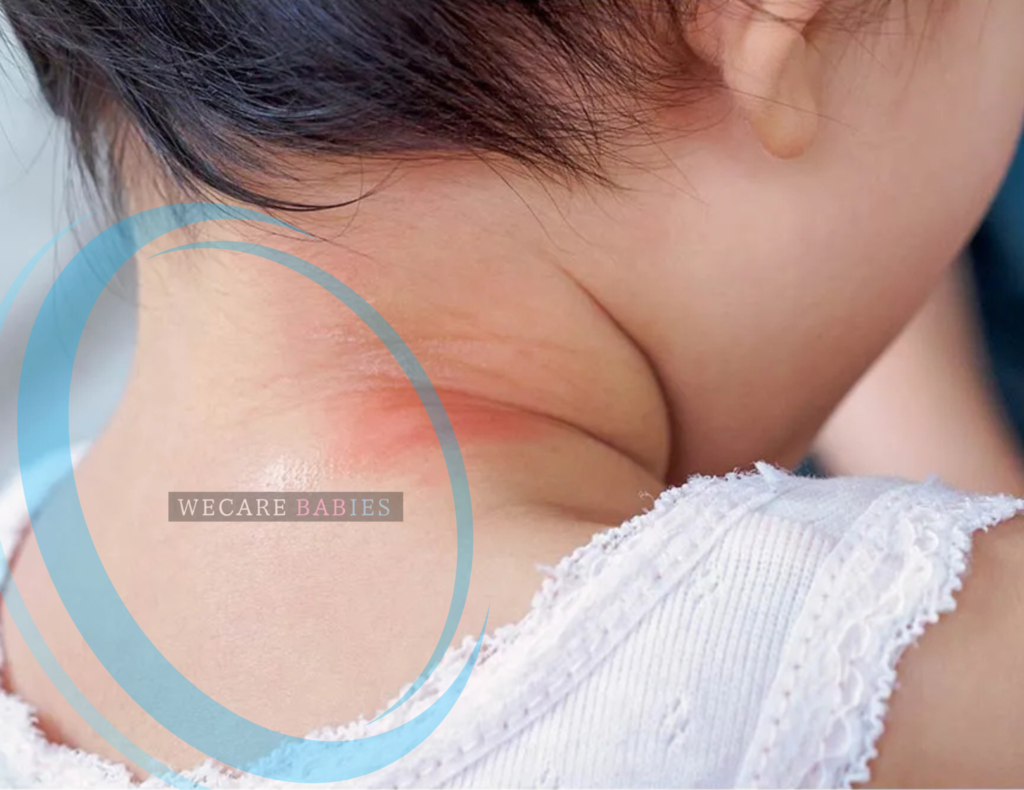
- 1. Heat and sweating
Babies cannot regulate body temperature as efficiently as adults. Excess sweating can block sweat ducts, leading to rashes.
- 2. High humidity
Humidity prevents sweat from evaporating, keeping the skin damp for longer periods.
- 3. Clothing habits
Over-layering, tight clothing, or synthetic fabrics trap heat and sweat close to the skin.
- 4. Skin folds
Neck creases, underarms, thighs, and diaper areas are especially vulnerable.
- 5. Frequent wiping
Repeated wiping of sweat can irritate already sensitive skin.
All these factors together explain why baby skin rashes are seen more often during hot and humid weather than in cooler conditions.
Understanding why babies get skin rashes during summer helps parents prevent unnecessary discomfort.
Many parents still ask why do babies get skin rashes during summer despite good hygiene, and the answer is usually excess heat combined with moisture and friction.
Knowing why do babies get skin rashes during summer makes prevention much easier.
Common mistakes parents make (with good intentions)

Parents and caregivers usually act with care and love, but some common practices can unintentionally worsen summer rashes.
1. Overdressing the baby
A common belief is that babies should always be well-covered. In summer, this can lead to overheating.
2. Excessive bathing
Bathing multiple times a day can dry out the skin and remove natural protective oils.
3. Heavy oil application
While massage can be soothing, applying thick layers of oil in peak summer can block sweat ducts.
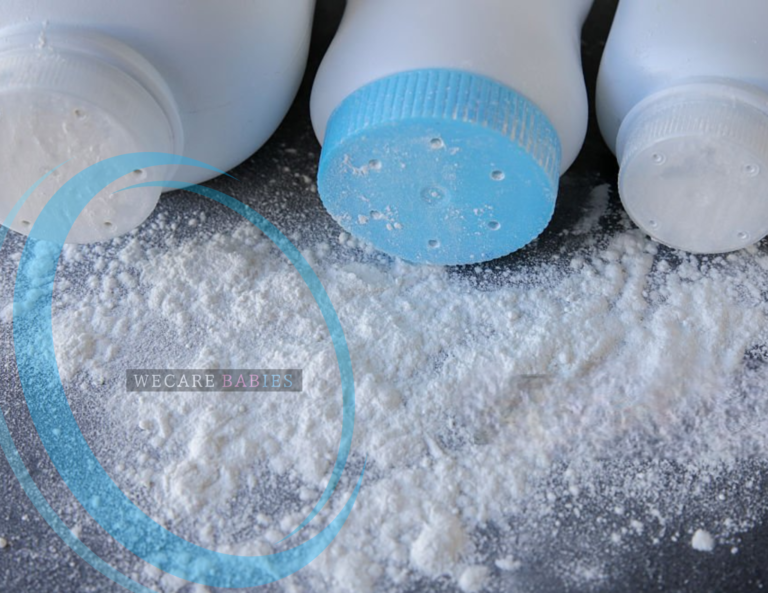
4. Using powders too frequently
Powders may feel cooling at first but can mix with sweat and clog pores.
5. Ignoring early signs
Mild redness is often overlooked until it spreads or becomes uncomfortable.
These practices are very common, and gentle corrections are usually enough to improve the situation.
What pediatricians usually recommend
From a clinical point of view, summer rash care focuses on cooling, dryness, and gentleness.
1. Keep the baby cool
- Well-ventilated rooms
- Fans or good air circulation (not blowing directly on the baby)
2. Choose the right clothing
- Loose-fitting cotton clothes
- Light colors
- One layer is usually enough indoors
3. Gentle bathing routine
- Once-daily bathing is sufficient
- Use lukewarm water
- Pat the skin dry carefully, especially in folds
4. Reduce friction
- Avoid tight elastic bands
- Change sweaty clothes promptly
5. Minimal product use
Keep skincare simple
Avoid experimenting with many creams or home remedies
Safe practices for homes & warm weather
During peak summer heat
- Avoid taking babies out in strong afternoon sun
- Use breathable bedding
- Ensure the diaper area stays dry
In humid environments
- Dry skin folds carefully
- Allow short diaper-free periods
At night
- Avoid heavy blankets
- Use light cotton sheets
Hygiene balance
- Clean sweat gently—do not scrub
- Change clothes as needed, not excessively
Small daily habits play a big role in preventing skin irritation during summer.
When parents should worry
Most summer rashes are harmless. However, consult a pediatrician if:
- The rash does not improve in 3–4 days
- The skin becomes very red, swollen, or painful
- Pus, cracks, or oozing appear
- The baby develops fever
- The baby seems unusually irritable or uncomfortable
These signs may indicate an infection or another condition that needs medical evaluation.
Doctor’s reassurance & closing advice
Pediatric experience across many summer seasons shows that summer skin rashes are a normal part of infancy in warm weather.
They are not a reflection of poor care. They are simply the skin’s response to heat, sweat, and the process of adapting to the outside world.
Keep your baby cool, dress lightly, maintain gentle hygiene, and avoid over-treatment. Trust your observations, and seek medical advice when something feels different.
With simple care and time, your baby’s skin will adapt—and so will your confidence as a parent.
According to the NHS, heat rash is common in babies during warm weather.
You can also read our guide on how often should a newborn baby be bathed for complete hygiene advice.
For product safety concerns, see our article on is baby powder safe for daily use on infants.