Contact Us: support@wecarebabies.com

Is baby powder safe for daily use on infants?

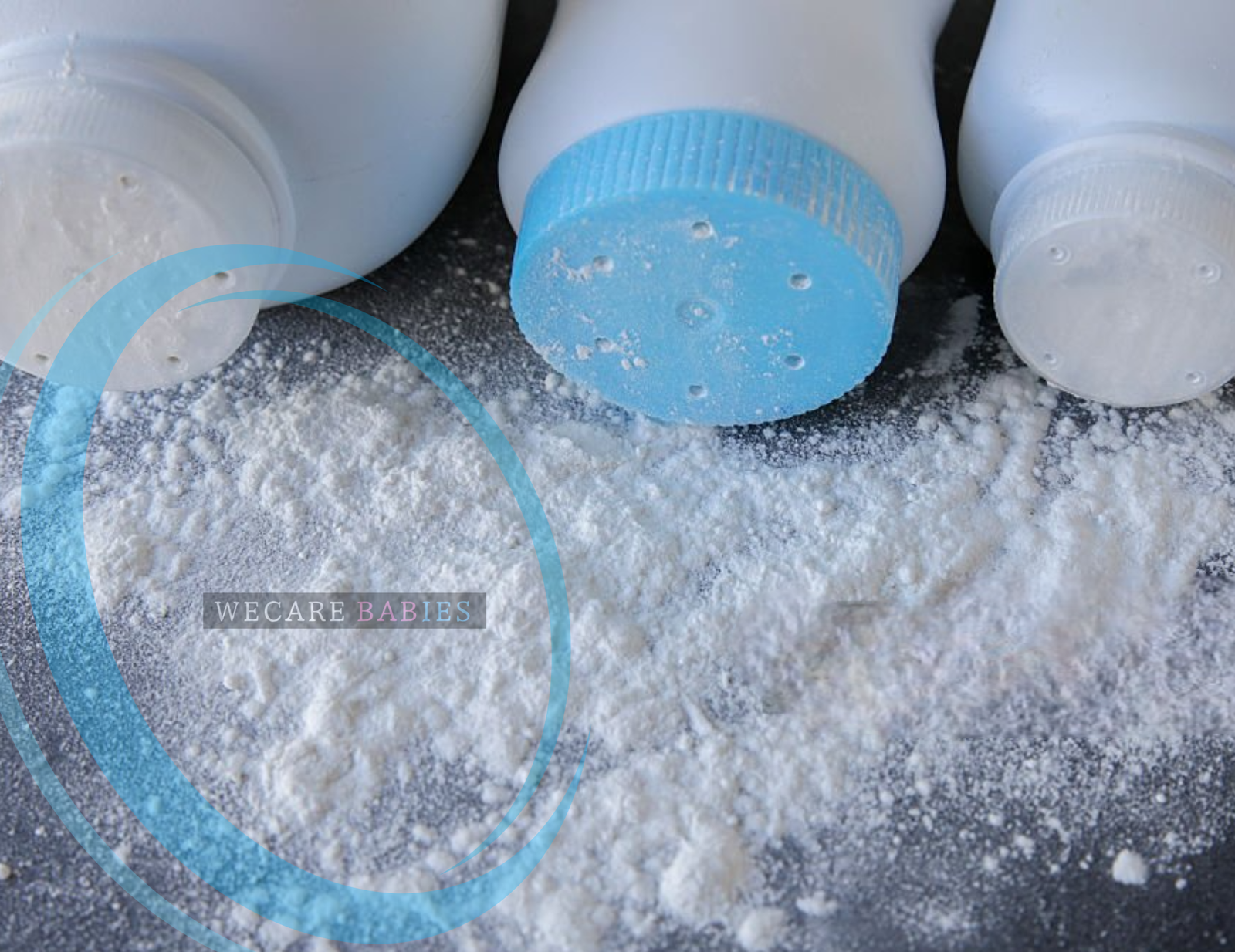
Many parents ask, is baby powder safe for daily use on infants, especially in hot and humid weather conditions.
Questions asked for pediatrician:
“Doctor, is baby powder safe for daily use on infants?”
Many parents wonder whether baby powder is safe for daily use on infants, especially in warm and humid climates.
To understand the confusion, it helps to know why baby powder became common in households around the world.
Traditionally:
- Many regions experience hot and humid weather
- Babies were often wrapped in multiple layers
- Cloth diapers were widely used
- Homes had limited airflow or ventilation
In these conditions, moisture in skin folds was common. Baby powder helped absorb moisture and reduced friction. For many families, it genuinely seemed useful.
So the use of baby powder did not come from carelessness—it came from practical needs of that time.
This leads to the key question: is baby powder safe for daily use on infants, or should parents avoid making it a routine?
Table of Contents
What baby powder actually does
Baby powder does not treat the skin. It performs only one basic function:
👉 It absorbs moisture on the skin surface
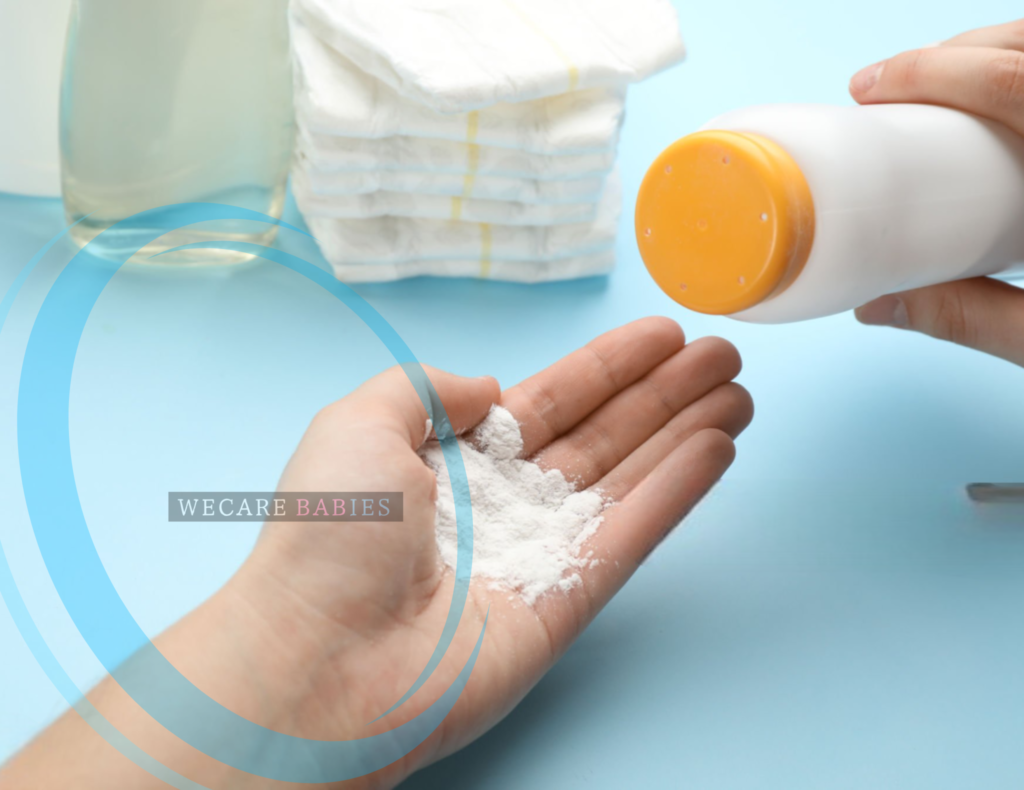
This can temporarily:
- Reduce stickiness
- Reduce friction between skin folds
- Make the skin feel dry
However, it is important to understand what baby powder does not do:
- It does not heal rashes
- It does not protect the skin barrier
- It does not prevent infections
This difference is often misunderstood.
Is baby powder safe for infants? (Medical perspective)
The honest medical answer is:
Baby powder is not dangerous when used correctly and occasionally, but it is not required for daily use in most infants.
Concerns arise mainly because of how and how often it is used.
The two main medical concerns are:
1. Inhalation risk
Baby powder is very fine. When applied near the chest, neck, or face, it can:
- Become airborne
- Be inhaled by the baby
Newborn lungs are delicate. Repeated inhalation over time is not advisable, especially in enclosed spaces.
2. Moisture trapping
In humid conditions, powder can:
- Mix with sweat
- Form clumps in skin folds
- Trap moisture instead of absorbing it
This can worsen rashes, especially in the neck, groin, and diaper area.
Common mistakes seen in homes
From years of clinical experience, a few repeated patterns are commonly seen.
1. Using powder after every diaper change
This is unnecessary and often leads to buildup in skin folds.
2. Applying thick layers
More powder does not mean more protection. Thick layers increase inhalation risk.
3. Using powder on already irritated skin
Powder on red or broken skin can worsen irritation.
4. Using powder as a rash treatment
Powder does not heal rashes and can delay proper care.
These mistakes usually happen due to lack of clear guidance, not neglect.
Daily hygiene without relying on baby powder
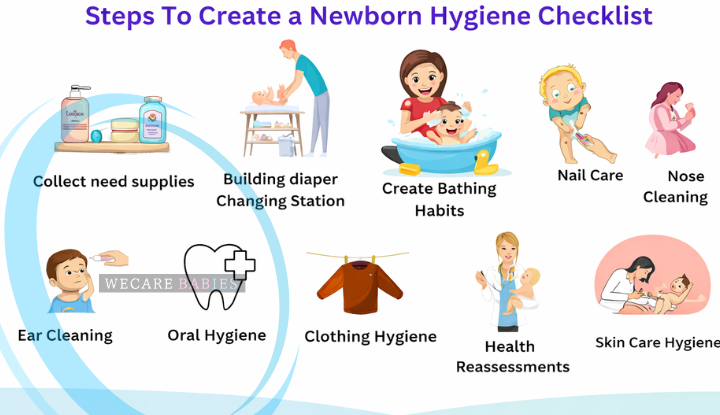
One of the biggest misconceptions is that baby powder is necessary for hygiene. It is not.
Good daily hygiene for infants includes:
- Gently cleaning the diaper area
- Drying skin folds properly
- Changing wet clothes promptly
- Keeping the baby cool and comfortable
Thorough drying after cleaning does more to prevent rashes than powder ever can.
When baby powder may be used (with caution)
Understanding whether is baby powder safe for daily use on infants helps parents make informed decisions about everyday skin care.
There are situations where limited use of baby powder may be acceptable.
For example:
- Very hot days with excessive sweating
- Short-term use in skin folds if advised by a doctor
- Older infants (not newborns) in well-ventilated spaces
How to use it safely:
- Take powder onto your hand away from the baby
- Apply lightly—do not pour directly from the bottle
- Avoid the chest, face, and neck area
- Stop use if any rash appears
Occasional, mindful use is very different from routine daily use.
Addressing advice from elders respectfully
Grandparents often say:
- “We used it daily, nothing happened”
- “Babies need powder in summer”
- “Without powder, babies will sweat and fall sick”
It helps to remember:
- Parenting practices change over time
- Diapers, clothing, and ventilation have improved
- Medical understanding continues to evolve
You can gently explain that:
- Modern diapers absorb moisture better
- Doctors now focus on protecting the skin barrier
- Fewer products often lead to healthier skin
Respectful explanation works better than argument.
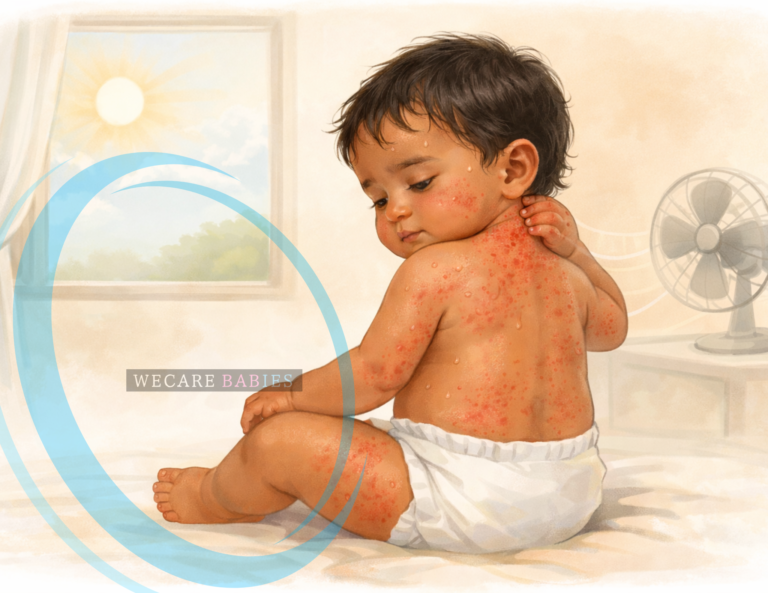
If you are also concerned about seasonal skin problems, you may find our article on why babies get skin rashes during Indian summers helpful.
Signs that baby powder is not suiting your baby
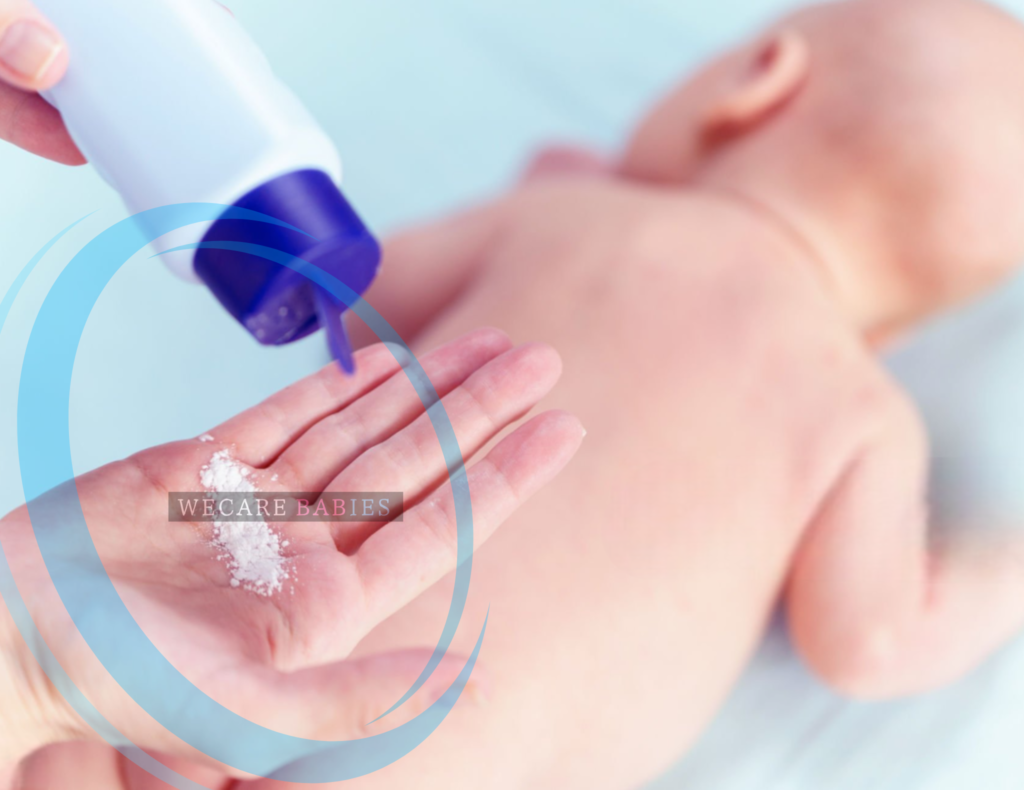
Stop using baby powder and consult a pediatrician if:
- A rash worsens after application
- Skin looks sticky or clumpy
- The baby coughs during application
- Redness appears in skin folds
Your baby’s skin response is the best guide.
Doctor’s reassurance & closing advice
Baby powder is not evil, but it is also not essential.
So, is baby powder safe for daily use on infants is a question every parent should consider carefully before making it part of a daily routine.
Most infants do perfectly well without daily powder use. Cleanliness, dryness, and gentle care matter far more than any product.
If you choose to use baby powder:
- Use it sparingly
- Use it thoughtfully
- Use it only when truly needed
When parents understand why something is advised, confusion reduces and confidence grows. And confident, calm parenting is always better for babies than fear-driven decisions.
According to the FDA, talc used in cosmetic products such as baby powder has been closely reviewed due to safety and contamination concerns.