Contact Us: support@wecarebabies.com

How Often Should a Newborn Baby Pass Stools? (Understanding Newborn Baby Stool Frequency)


How often should a newborn baby pass stools? This is one of the most common concerns for new parents in the first weeks of life.
It’s 2 a.m., and you’re staring at the diaper again.
“Is this too much? Or not enough?”
If you’ve been searching about newborn baby stool frequency, you’re not alone. Almost every new parent worries about poop in those first few weeks. The good news? In most healthy newborns, there’s a wide range of normal — especially during the first month of life.
Let’s walk through this calmly and clearly.
Table of Contents
How Often Should a Newborn Baby Pass Stools? (Direct Answer)
Many parents ask how often should a newborn baby pass stools during the first month.
In the first month of life, a newborn may pass stools anywhere from several times a day to once every few days. Breastfed babies often stool more frequently, sometimes after every feed, while formula-fed babies may stool less often. As long as your baby is feeding well, gaining weight, and seems comfortable, this range is usually normal.
Why Parents Worry About This
It’s easy to feel confused.
Many parents still ask how often should a newborn baby pass stools during the first month. In most healthy babies, how often should a newborn baby pass stools depends on feeding type and gut maturity.
One family member says, “The baby must poop every day.”
An online forum says, “Seven times a day is normal.”
Social media comments suggest constipation if there’s no stool for 24 hours.
With so many opinions, it’s no surprise parents feel anxious.
The truth is, newborn digestion is still maturing. Patterns vary. Comparing your baby to someone else’s baby often creates unnecessary stress.
Understanding how often should a newborn baby pass stools helps reduce unnecessary anxiety.
What Is NORMAL (Doctor Explanation)
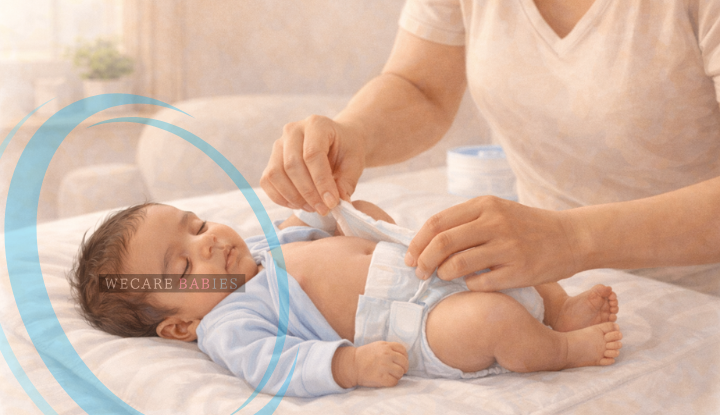
When we talk about stool patterns in babies 0–1 month old, we look at the whole picture — feeding, comfort, weight gain, and behavior.
🟢 Newborn Baby Stool Frequency in the First Month
During the first 4 weeks:
- Some newborns pass stool 3–8 times per day.
- Some pass stool after almost every feed.
- Others may go once every 1–3 days.
All of these can be normal.
🟢 Breastfed Babies
Breastfed newborns often:
- Pass frequent, loose, mustard-yellow stools.
- Stool after most feeds in the first few weeks.
- Have soft, seedy-looking stools.
Because breast milk is easily digested, frequent stools are common and healthy.
🟢 Formula-Fed Babies
Formula-fed newborns may:
- Pass stool 1–4 times per day.
- Have slightly firmer stools (but still soft).
- Develop a more predictable pattern.
They may stool less often than breastfed babies, and that’s usually fine.
🟢 Variations That Are Still Healthy
Even within the same baby, patterns can change:
- Frequency may decrease after the first 2–3 weeks.
- Stool color can vary from yellow to greenish.
- Some babies strain or turn red while passing stool — this is often normal effort, not constipation.
What matters most is consistency in feeding and growth, not the exact number of diapers.
What Is NOT Normal (Needs Medical Attention)
Most stool changes are harmless. However, certain signs should prompt a pediatric visit.
Contact your pediatrician if you notice:
- Persistent vomiting (especially forceful or green-colored)
- Blood in the stool
- Very hard, pellet-like stools
- Signs of dehydration (very few wet diapers, dry mouth, extreme sleepiness)
- Severe lethargy or poor feeding
These signs don’t automatically mean something serious — but they deserve evaluation.
Common Myths vs Facts
You may have heard:
“If the baby doesn’t poop daily, it’s constipation.”
In reality:
Constipation in newborns is about stool consistency, not frequency. If stools are soft, even if infrequent, it’s usually not constipation.
You may have heard:
“Straining means something is wrong.”
Here’s what we know medically:
Newborns often strain because their abdominal muscles are still developing. If the stool is soft, straining alone isn’t a concern.
You may have heard:
“Green stool means infection.”
In reality:
Green stool can be completely normal, especially in breastfed babies.
Practical Daily Care Tips

Instead of counting every diaper with anxiety, focus on patterns.
Here’s what helps:
- Track wet diapers as well as stool.
- Observe stool texture more than frequency.
- Watch your baby’s comfort during and after feeds.
- Keep feeding consistent.
- Stay calm if a day passes without stool, especially if baby seems comfortable.
Many parents find that writing down feeding and diaper times for a few days reduces worry.
When to See a Pediatrician
Consider scheduling a visit if:
- Your newborn has not passed stool in the first 48 hours after birth.
- Stools suddenly become very hard.
- You see blood or black tar-like stool (after the first few days of life).
- Your baby seems unusually irritable or very sleepy.
- You feel something isn’t right.
Trust your parental instinct. Even if everything turns out normal, reassurance matters.
Doctor’s Reassurance

In my years of caring for newborns, stool frequency is one of the most common concerns I hear.
And most of the time, the baby is perfectly healthy.
Newborn digestion is still adjusting to life outside the womb. Patterns vary widely in the first month. If your baby is feeding well, gaining weight, and seems content between feeds, occasional variations in stool frequency are usually normal.
You’re doing better than you think.
FAQs
Is it normal for my newborn to poop after every feed?
Yes. Especially in breastfed babies during the first few weeks.
My baby hasn’t pooped in 24 hours. Should I worry?
If your baby is comfortable and stools are soft when they do pass, this is usually normal.
How do I know if it’s constipation?
Constipation means hard, dry stools — not just fewer stools.
What color should newborn poop be?
Yellow, mustard, or greenish shades are common. Red or black (after the first few days) should be checked.
My baby strains and turns red. Is that normal?
Yes. Many newborns strain as they learn how to coordinate muscles.
Can formula change stool frequency?
Yes. Formula-fed babies often stool less frequently than breastfed babies.
Table Summary
| Situation | Likely Normal | When to Check With Doctor |
|---|---|---|
| 3–8 stools per day | Yes | — |
| No stool for 1–2 days, baby comfortable | Often normal | If baby seems distressed |
| Soft green stool | Yes | — |
| Hard pellet-like stool | No | Yes |
| Blood in stool | No | Yes |
Gentle Conclusion
Understanding newborn baby stool frequency can feel overwhelming at first. But remember, there’s a wide range of normal in the first month of life.
Watch your baby, not just the diaper count.
If your newborn is feeding well, growing, and seems comfortable, small variations in stool frequency are usually nothing to fear. And if you’re ever unsure, a calm conversation with your pediatrician can bring the reassurance you deserve.
You’re learning your baby every day — and that matters most.
According to the American Academy of Pediatrics, newborn stool patterns can vary widely in the first weeks of life.
You can also read our guide on is diaper rash common in newborn babies.
